K-Style vs. Half-Round Gutters: Profile, Appearance and Maintenance
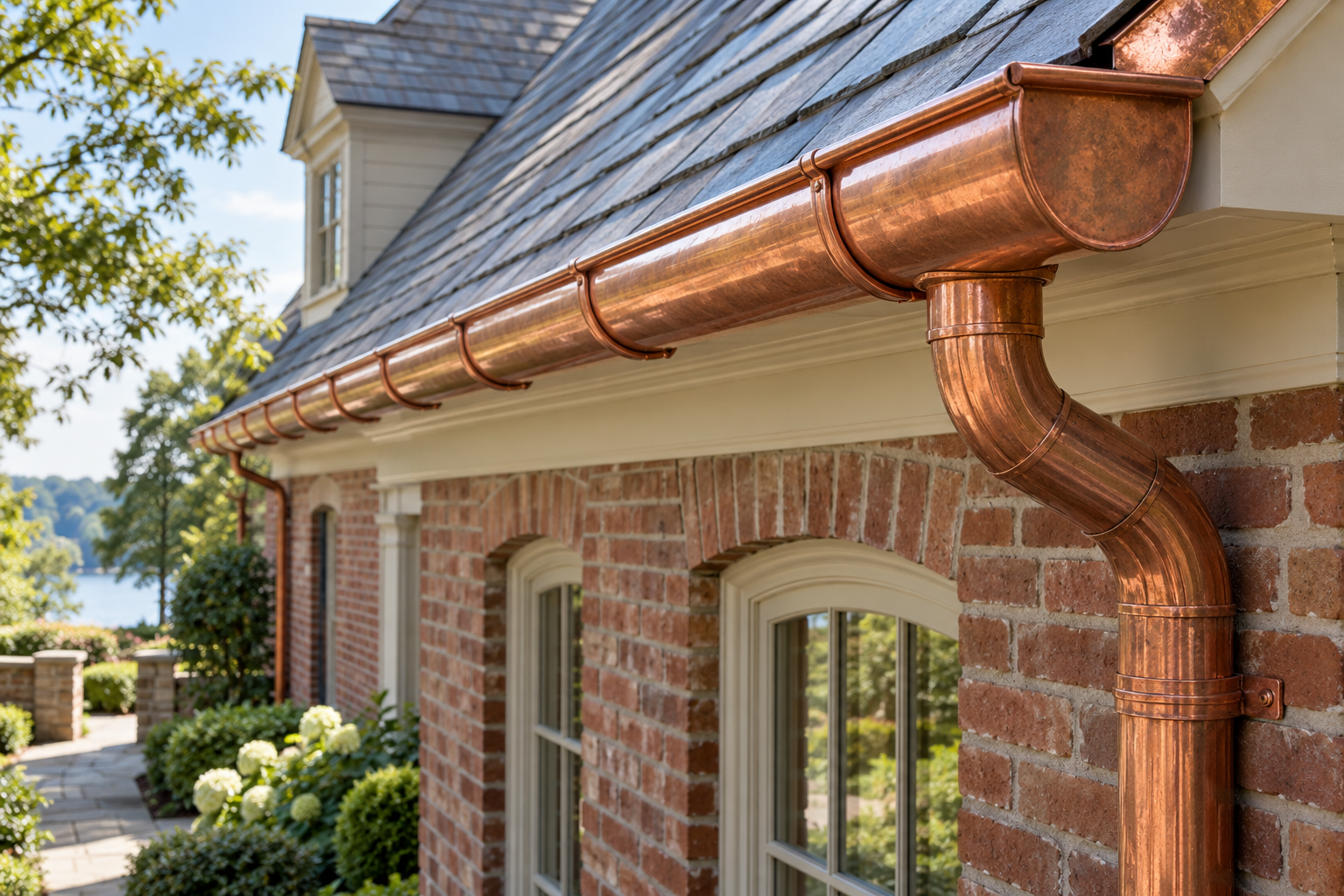
K-style and half-round gutters have visibly different profiles. K-style gutters use an angular form often associated with modern fascia lines. Half-round gutters have a curved channel that can suit traditional architecture. The choice affects fittings, supports and appearance as well as drainage.
Compare actual profiles rather than width alone
A nominal size does not make different shapes hydraulically equivalent. A 6-inch K-style gutter and a 6-inch half-round product can have different cross sections and installation details. Compare manufacturer capacity information for the actual system at the proposed slope and outlet arrangement.
Start with the gutter size calculator, then verify the selected profile with the supplier. Treat an online recommendation as an initial planning result.
Review the roof-edge appearance
Ask for samples or photographs showing the product on a similar roof edge. Consider fascia depth, roof overhang, bracket visibility and downspout shape. The system should be judged as a complete exterior detail rather than as an isolated gutter sample.
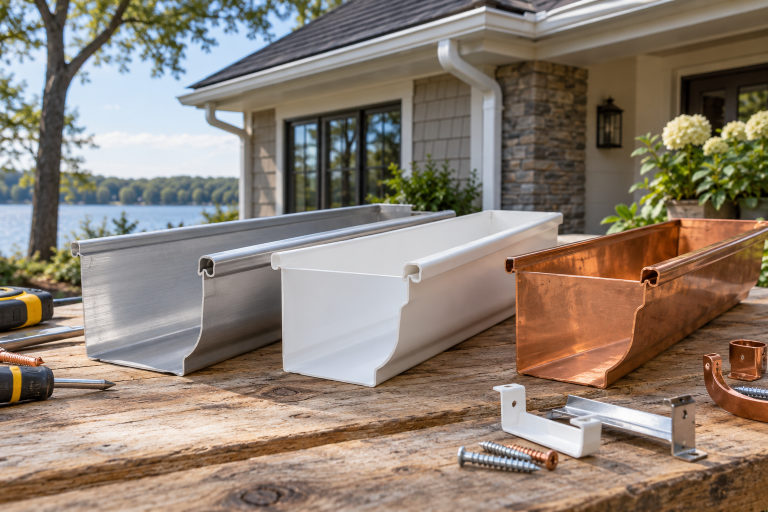
Half-round does not automatically mean copper, and K-style does not automatically mean aluminum. Profile and material are separate decisions. Our gutter material guide covers that comparison.
Check brackets, corners and outlets
- Confirm the compatible hanger or bracket system.
- Identify how corners and end caps will be joined.
- Specify outlet openings and matching downspouts.
- Check how the system attaches to your fascia or other support.
- Ask whether replacement parts are available locally.
A quote using a different bracket or outlet arrangement may not be directly comparable, even when the gutter width is the same.
Think about cleaning access
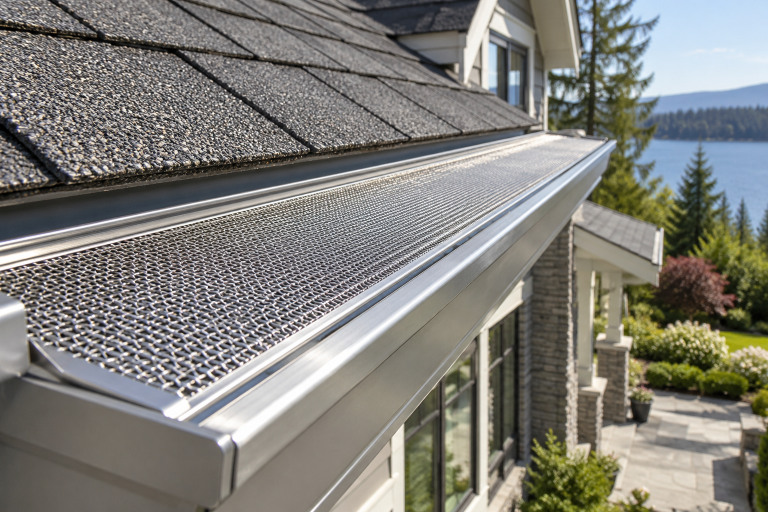
Both profiles need inspection and debris removal. Access depends on height, nearby trees, guards and the roof configuration. Ask how outlets can be reached and whether any proposed leaf guard is approved for that particular profile.
Compare installed systems
Use equal measured lengths, downspout quantities and repair allowances when reviewing costs. Include old-gutter removal, access, compatible fittings and workmanship terms. The installation cost calculator can help organize your comparison.
Which profile should you choose?
Select a profile that meets the drainage requirement and fits the building, then compare a complete specification you can maintain. Neither shape is universally the best choice. Correct outlet sizing, support and discharge routing remain essential with either design.