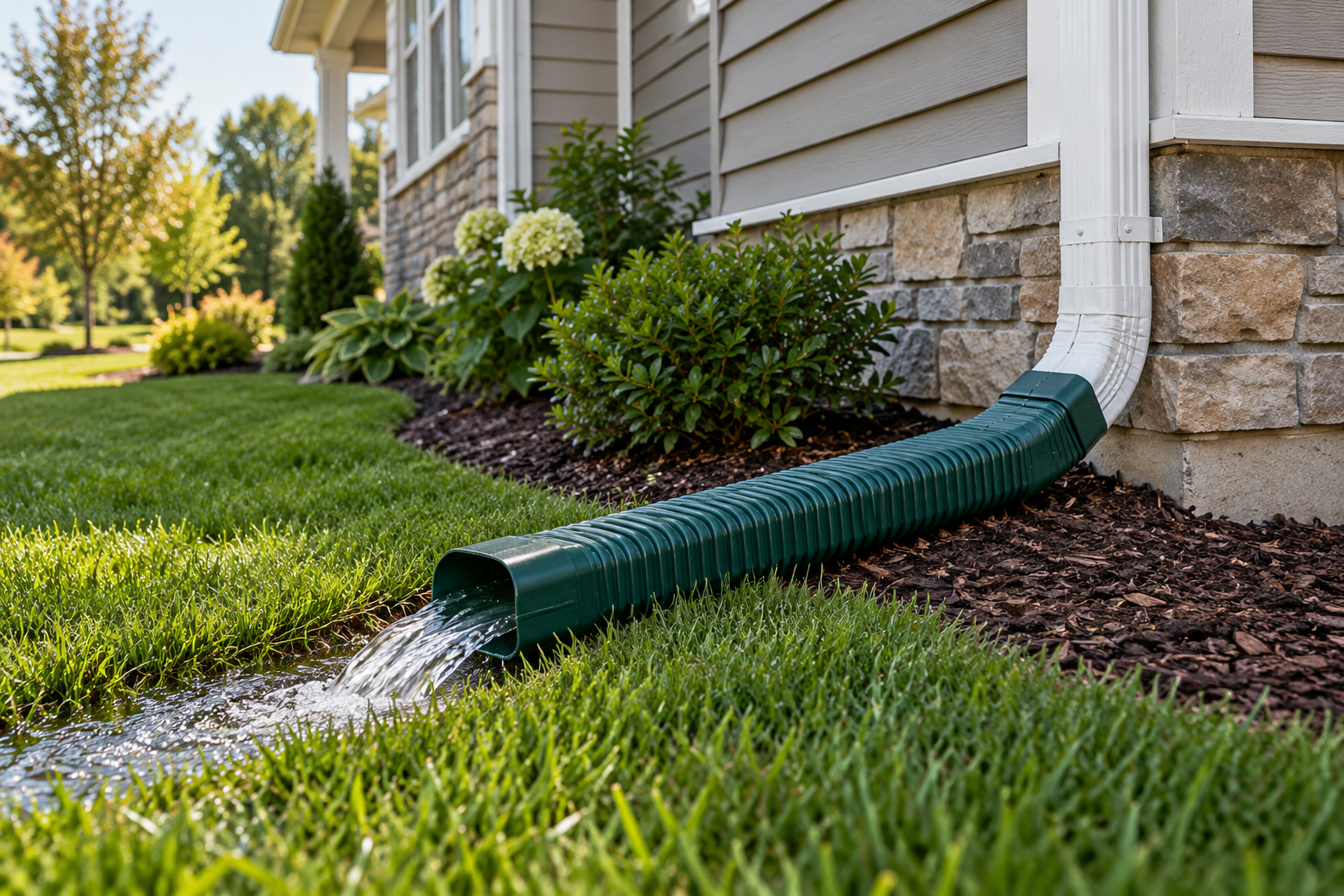
Downspout Extensions vs. Splash Blocks: Choosing a Discharge Route
A downspout is only useful if its discharge has somewhere appropriate to go. Splash blocks and extensions manage that final part of the route in different ways. Choose based on the ground slope, destination and maintenance needs instead of buying an accessory first.
What a splash block does
A splash block receives the falling stream and spreads it over a short surface path. It may help limit local soil erosion where the surrounding grade already carries water away. It cannot overcome ground that slopes back toward the house.
Check whether the block stays in position and whether water runs beyond it to a suitable destination. A block sitting in a depression may simply create a puddle.
What an extension does
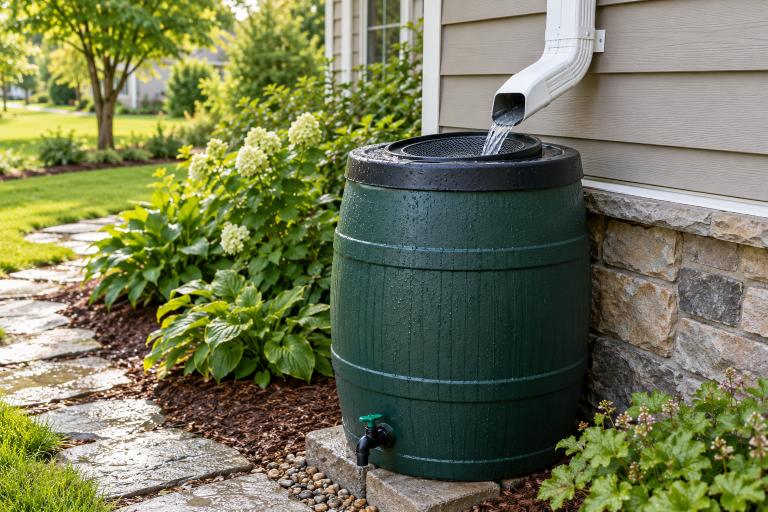
An extension carries water farther from the downspout outlet. Its effectiveness depends on fall, connections, outlet position and whether the receiving ground can handle the discharge. A long extension with a low sag may retain water and debris.
Plan a route that avoids trip hazards, mower damage and recurring movement. Confirm local requirements before directing water toward a sidewalk, street connection or property boundary.
Inspect the destination
- Does the ground carry water away from the foundation?
- Can discharge erode soil or undermine paving?
- Will it create ice or a walking hazard in cold weather?
- Does it affect a neighboring property?
- Can the outlet be inspected and kept clear?
The downspout calculator helps with upstream planning, but a site inspection is needed to establish the final discharge route.
Be careful with buried extensions
Underground drainage needs suitable pipe, fall, access for cleaning and an appropriate approved outlet. Do not assume burying a flexible extension solves a surface drainage problem. A blocked buried pipe can send water back toward the house while hiding the cause.
Compare the whole installation
For a simple visible route, compare the accessory price with the labor needed to secure and grade it. For an underground system, ask for the route, outlet, cleanout arrangements and reinstatement work in writing. Confirm that existing utilities are located before excavation.
Check performance after rain
Look for standing water, soil channels, disconnected joints and discharge returning toward the wall. Repositioning the end may not be enough if the overall grade is wrong. For more on the reason discharge matters, read gutters and foundation protection.
If water backs up before reaching the extension, first work through the overflow diagnosis guide. Treat the gutter, downspout and discharge route as one connected system.