Gutter Slope per 10 Feet: How to Calculate the Correct Fall
Gutter slope is the height difference that directs water toward an outlet. Too little fall, an unintended low spot or a section pitched away from its downspout can leave water behind. The correct specification comes from the gutter system manufacturer and the project design.
Understand the common starting point
Some residential installation guides use a fall of 1/4 inch for every 10 feet of gutter. This is a starting reference for those systems, not a universal rule for every profile or building. Confirm your product instructions before setting hanger heights.
The Amerimax catalog gutter FAQ is one example of manufacturer guidance describing that slope. A different gutter system may have different requirements.
Calculate the total drop
Use this relationship: total drop = run length ÷ reference length × specified fall. Keep length units consistent. For a 30-foot run using 1/4 inch per 10 feet, the calculated drop is 30 ÷ 10 × 0.25 = 0.75 inch.
For a 40-foot run draining from a central high point to outlets at each end, calculate each 20-foot drainage segment separately. Do not apply the full 40-foot drop to both halves.
Check the actual drainage path
- Identify the outlet and the intended high point.
- Measure the horizontal run feeding that outlet.
- Calculate the height difference from the product specification.
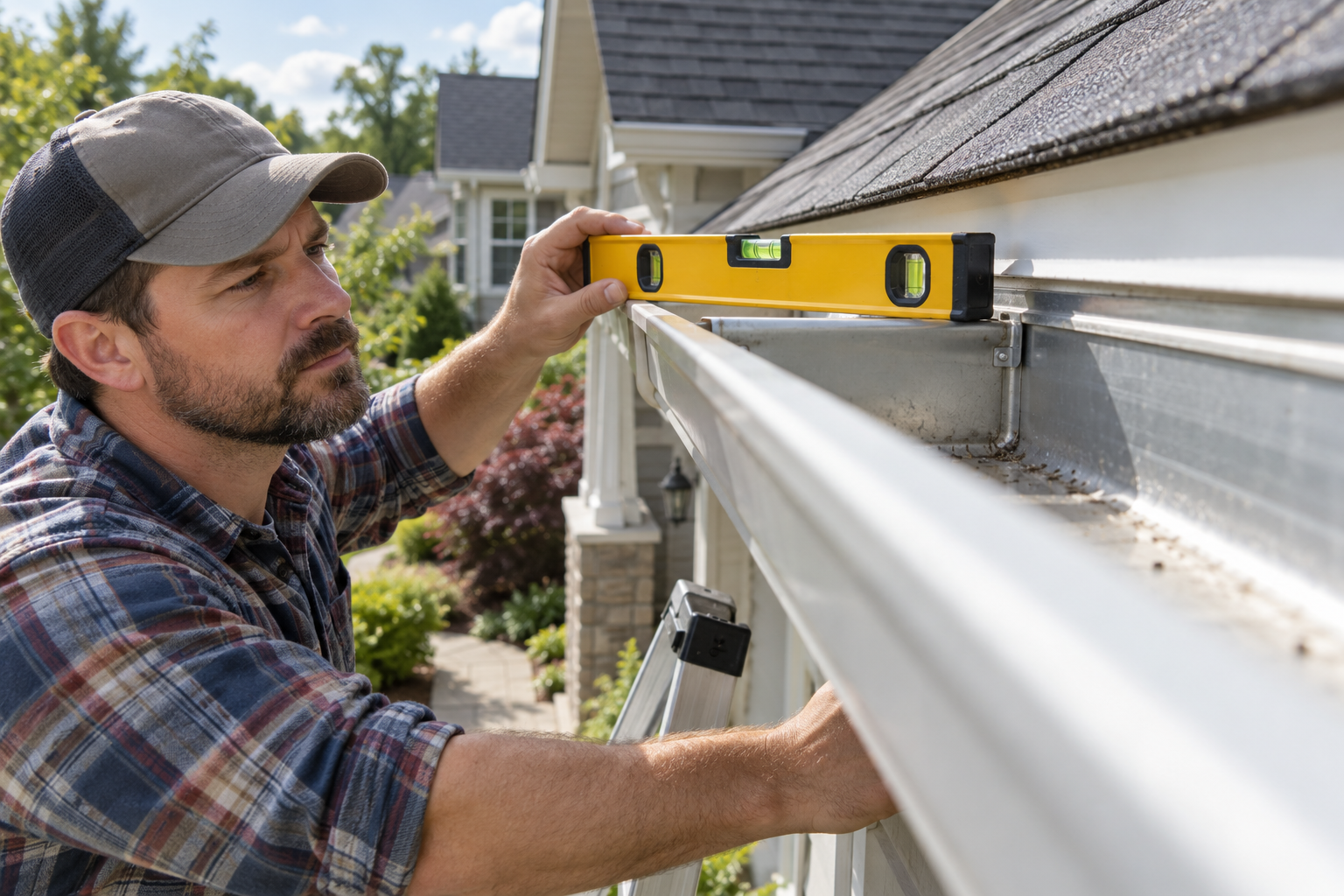
- Have the supporting fascia and hanger arrangement checked.
- Verify that corners and intermediate sections do not create pockets.
The gutter slope calculator can help with arithmetic. It cannot identify rotten fascia, distorted gutters or installation obstructions.
Why correct endpoints may still leave standing water
A gutter can have the correct end-to-end fall and still sag between hangers. A raised seam, obstructed outlet or local deformation can create a small dam. Inspect the entire run instead of measuring only the ends.
A thin wet film after rainfall differs from a persistent pool. Document where water remains and whether the same location fills after every storm. Avoid climbing onto a roof simply to take a measurement; use a qualified installer for elevated access.
Does more slope always work better?
No. Excessive drop can create poor roof-edge alignment, an awkward appearance or an unsuitable outlet position. Slope also does not correct an undersized outlet. Review the full layout with the downspout planning guide.
Before paying for a reset
Request a scope covering hanger adjustment, fascia condition, corners, sealing and a drainage check. Use the gutter repair cost calculator for preliminary budgeting, then obtain a site-specific quote.