Water Dripping Behind Gutters: Drip Edge, Position and Roof Details
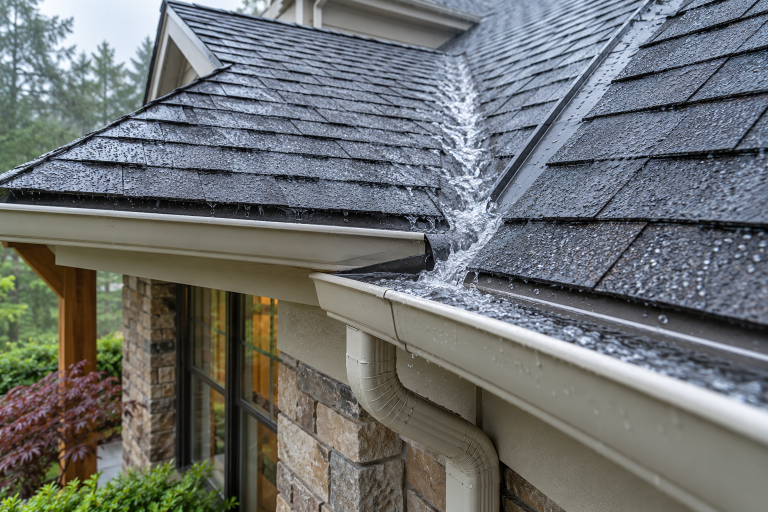
Water dripping behind gutters can indicate a roof-edge collection problem, but it may also come from overflowing water or a leak higher on the roof. Trace the water path before trying to close every visible gap with sealant.
Distinguish behind-the-gutter flow from overflow
Observe from the ground during rain. Does water appear between the fascia and gutter, spill over the front, or follow the wall from a roof junction? Note whether the gutter itself is full. Record the location and rainfall conditions for the roofer or gutter installer.
For front-edge spill or backup, first use the overflow diagnosis guide. A blocked outlet can create symptoms near an otherwise sound roof edge.
Ask for a coordinated roof-edge inspection
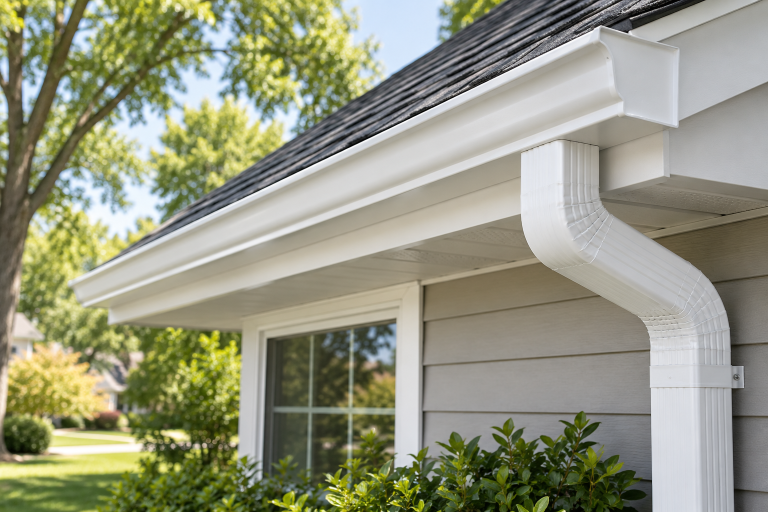
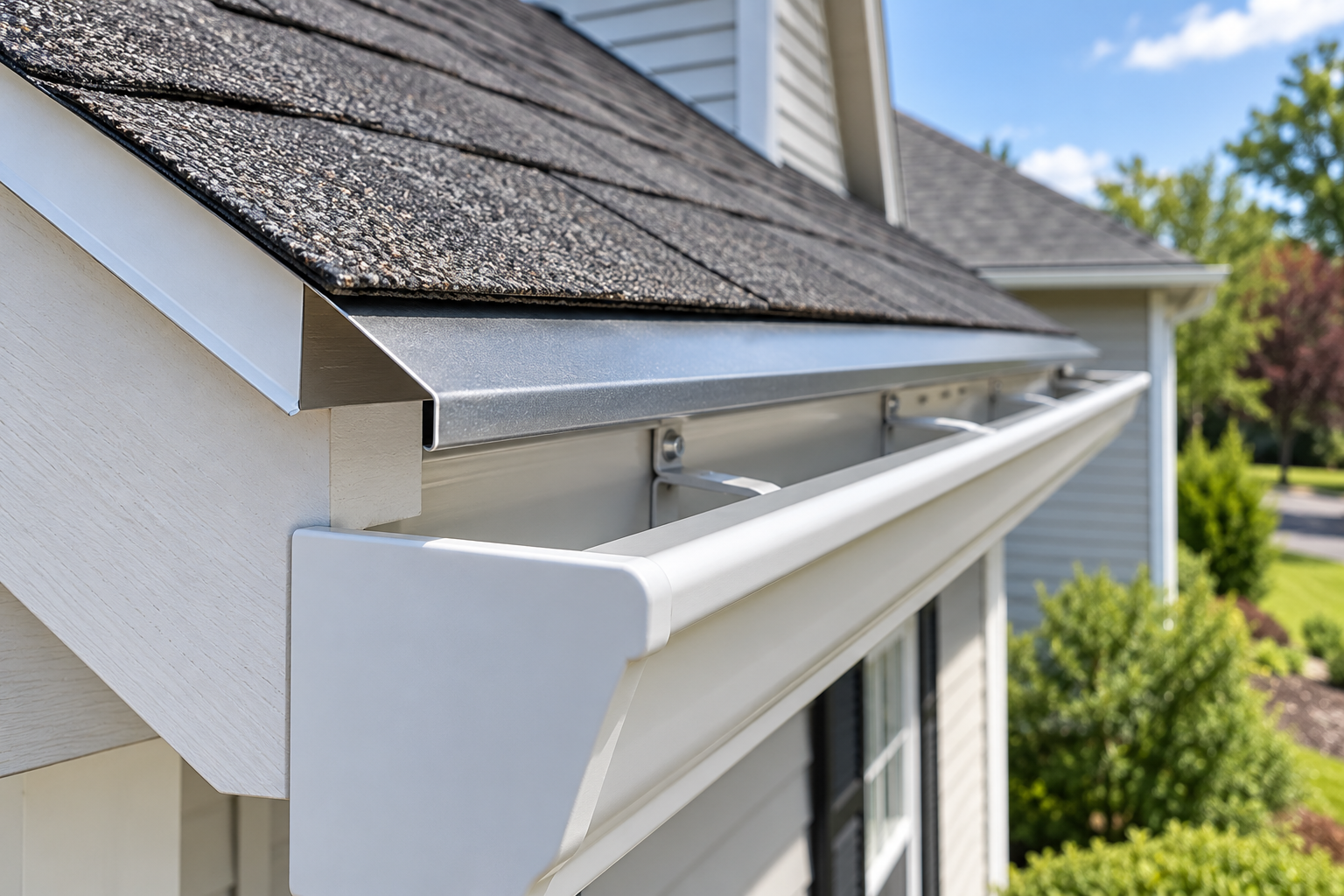
Have the contractor inspect the roof covering overhang, drip-edge or gutter-apron arrangement, gutter height and fascia condition. The appropriate detail depends on the roofing system and manufacturer instructions. There is no single gap or sealant treatment that suits every roof.
If the gutter has moved, inspect hangers and supporting material. Repositioning it without addressing a weak attachment can allow the same problem to return.
Check roof-wall intersections
At a roof meeting a wall, runoff may need a correctly integrated diverter flashing detail to enter the gutter rather than run down the siding. PNNL’s gutters and downspouts guidance discusses kick-out diverter flashing as part of managing concentrated water.
A gutter installer and roofer may need to coordinate the repair. Exterior sealant alone is not a substitute for a properly integrated roof and wall drainage detail.
Document damage before covering it
- Soft or visibly deteriorated fascia.
- Loose brackets or displaced gutter sections.
- Repeated staining behind the same run.
- Damaged trim or siding near a roof-wall junction.
Ask for photographs of concealed damage and a written scope before replacement components cover the area.
What should a quote include?
Request the diagnosed water path, required roofing or flashing work, fascia repair, gutter adjustment and a final drainage check. Separate these items so you can understand the remedy. Use the repair cost calculator only for early planning.
Can you solve it by adding a larger gutter?
Only if inadequate collection or capacity is actually part of the diagnosis. A larger gutter will not repair a roof leak or an incorrectly detailed wall junction. Review gutter support problems if movement is visible.