Sagging Gutters: Causes, Warning Signs and Repair Decisions
Sagging gutters usually signal a support or shape problem that deserves inspection. A low section can collect water and debris, increase loading and disrupt drainage toward the outlet. The repair should address why the section moved before restoring its position.
Recognize the warning signs
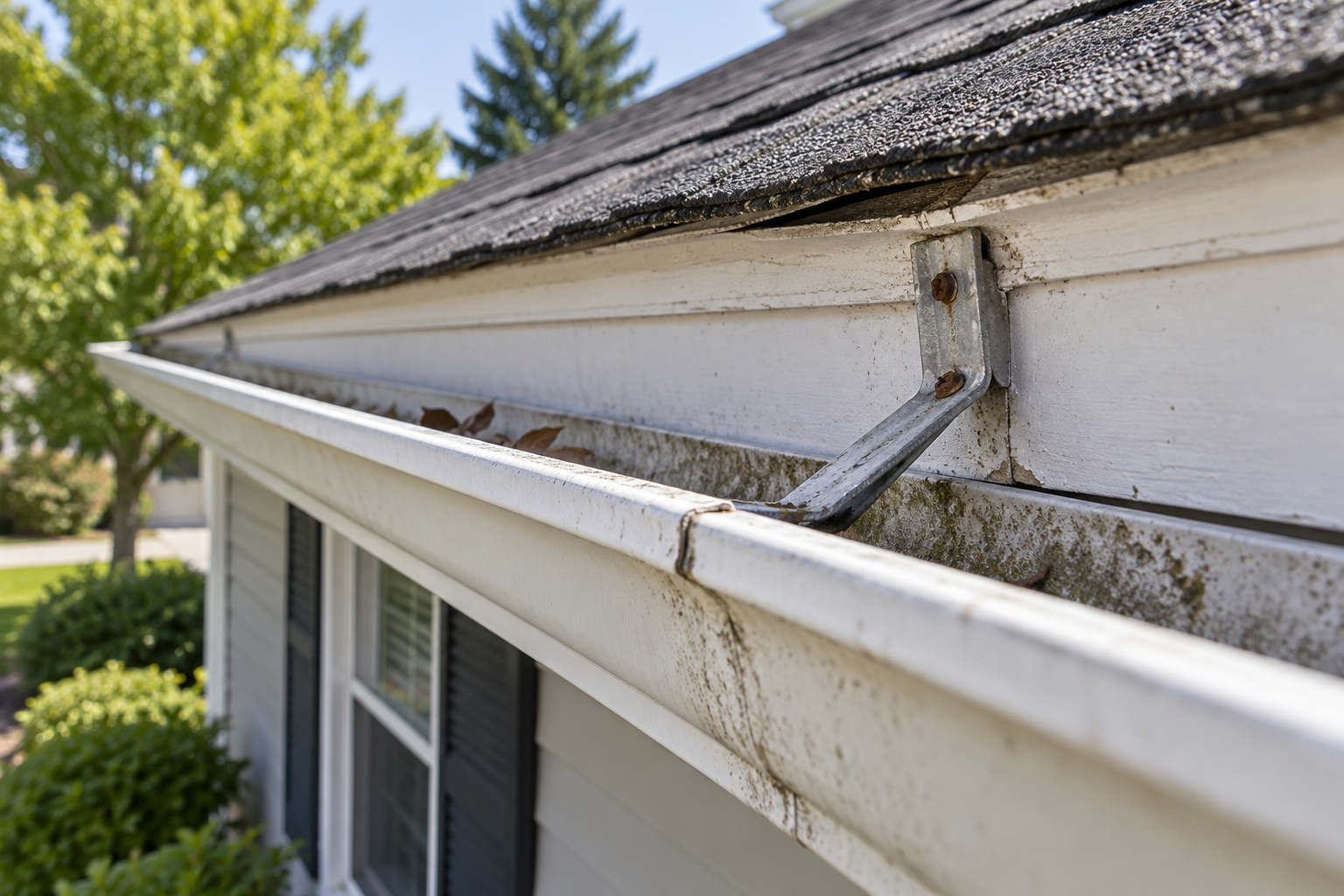
Look from the ground for a bowed gutter line, a visible gap at the fascia, displaced brackets or water spilling from one low point. A line of staining may help locate repeated leakage, but it does not prove the supports are sound or unsound.
Do not push, pull or load a loose gutter from a ladder. If a section is visibly detaching, keep people away from the area beneath it and arrange professional assessment.
What can cause sagging?
- Debris and retained water adding load.
- Loose, damaged or unsuitable hangers.
- Deteriorated fascia or inadequate fastener engagement.
- Impact damage or deformation.
- Snow and ice loads that exceed the installed arrangement.
Several causes can occur together. Cleaning may reduce the load but will not restore a damaged bracket or decayed supporting board.
Inspect the full support path
Ask the contractor to identify the gutter material and product requirements, then assess the hangers, fixings and supporting structure. Avoid replacing fixings in the same weakened holes without confirming the substrate is suitable.
Where fascia repair is needed, it should be included explicitly in the quote. Covering a damaged board with new guttering can leave the original attachment problem unresolved.
Restore drainage as well as alignment
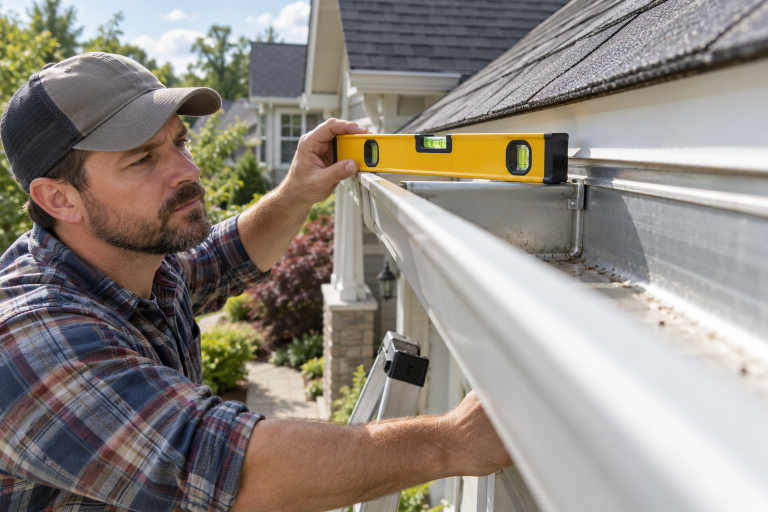
A visually straight gutter may still drain in the wrong direction. After the support repair, verify the intended high points, outlets and any local pockets. The slope calculation guide explains the difference between total fall and a sag within the run.
Repair or replace?
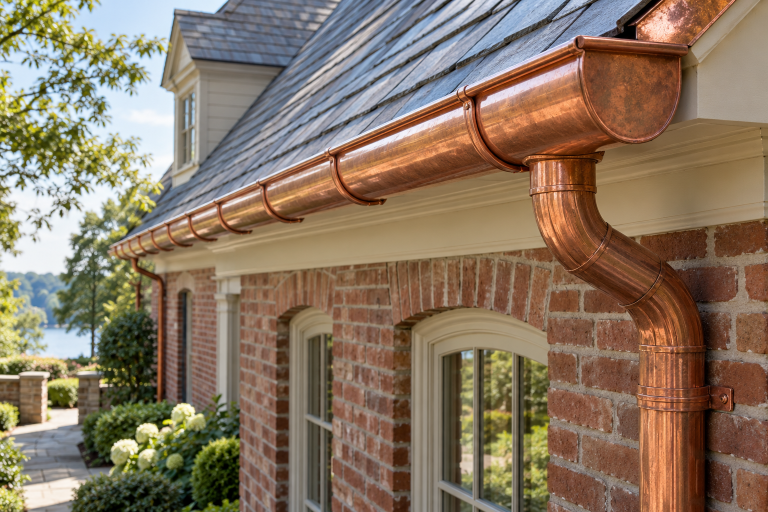
If the gutter profile is sound, a suitable reset and support repair may be enough. If the run is badly distorted, cracked or extensively deteriorated, replacement may be more reliable. Compare the proposed repair with the cost of replacing only the affected run before assuming the whole house needs new gutters.
The repair cost calculator can support budgeting. Include access, fascia work, replacement supports and drainage verification in the final written quote.
Prevent a repeat problem
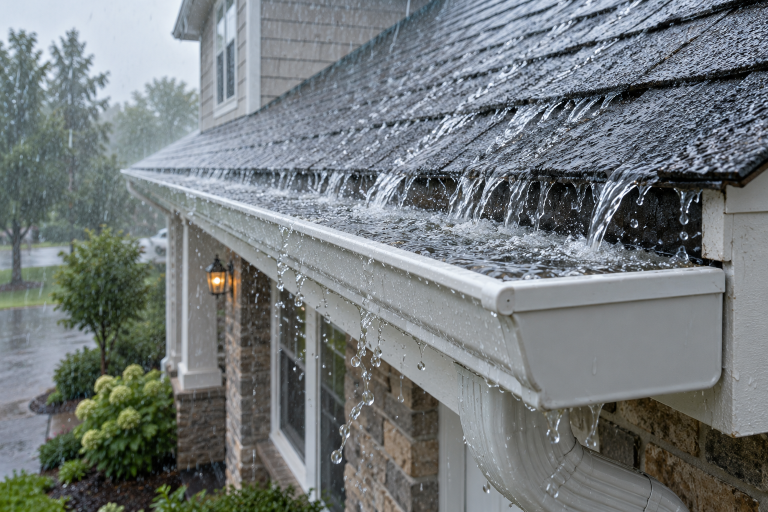
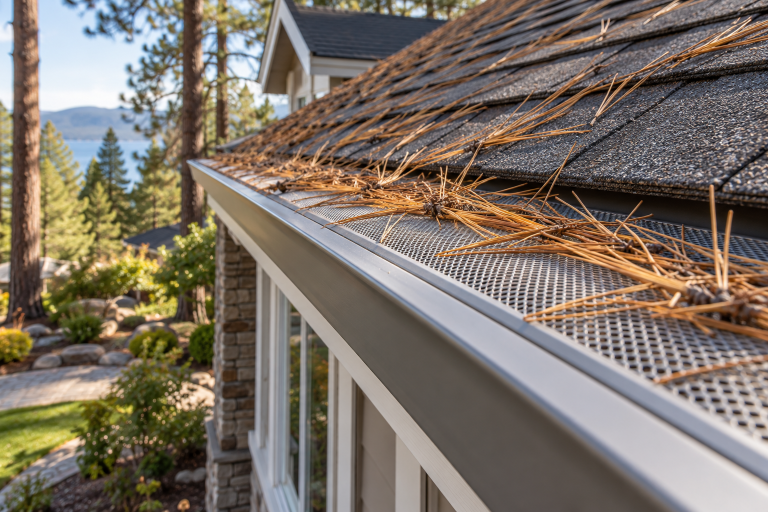
Keep debris from accumulating and inspect after major storms. If overflow continues after repairs, use the overflow troubleshooting guide. A support repair and a hydraulic capacity problem may require separate remedies.