Roof Runoff Calculation: Convert Rainfall into Gallons per Minute
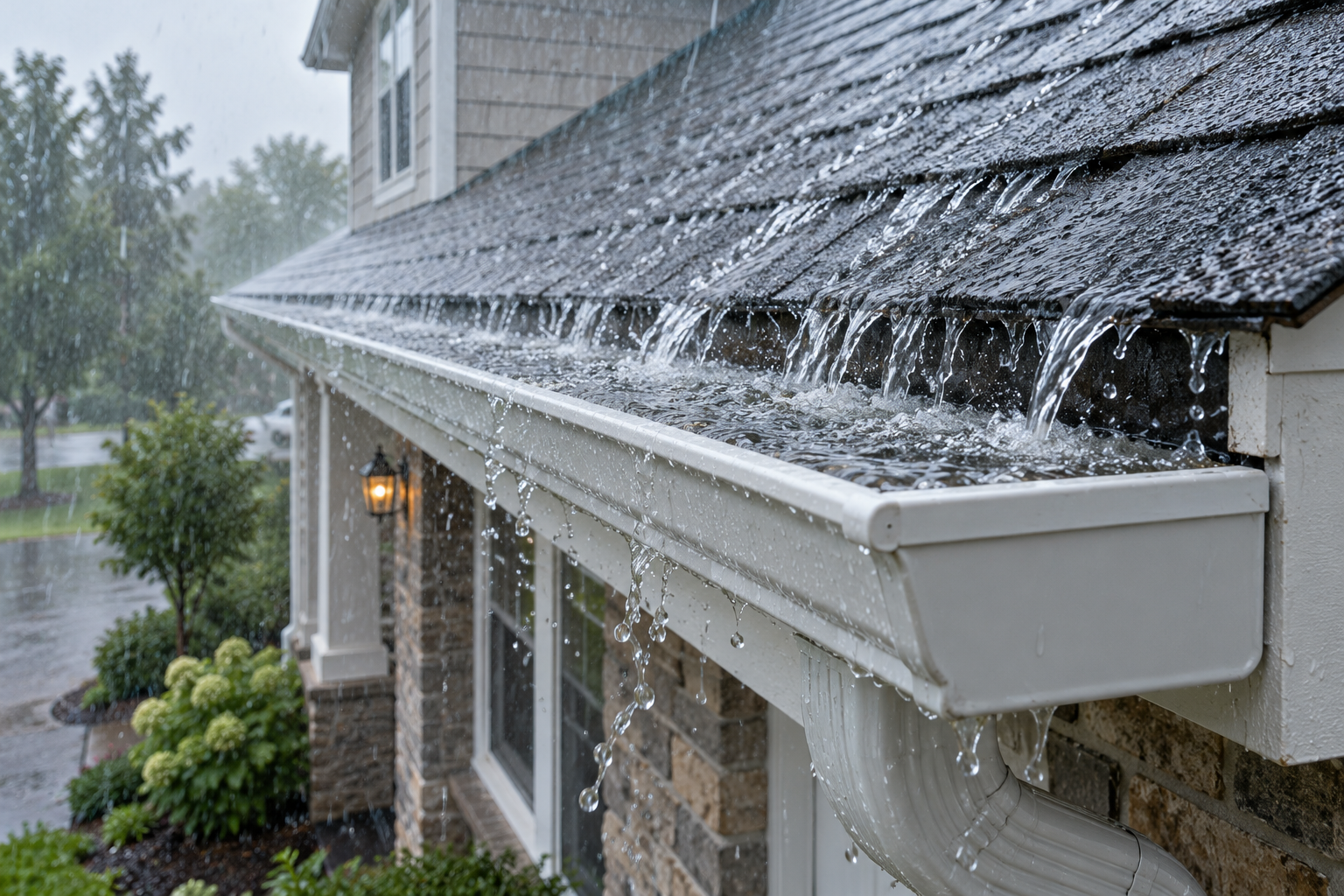
A roof runoff calculation estimates how quickly rainfall reaches your drainage system. That flow rate helps you compare gutter and downspout capacity. It is different from the total gallons collected in a barrel over a storm.
Use intensity for a flow-rate calculation
When area is in square feet and rainfall intensity is in inches per hour, the approximate ideal runoff is gallons per minute = area × intensity × 0.0104. The constant is approximately 0.623 gallons per square foot per inch divided by 60 minutes per hour.
This simple conversion assumes the contributing area sheds the rainfall being counted. Actual design can require additional factors and local requirements. It does not independently select a compliant gutter size.
A worked example
Assume a roof section has a horizontal contributing area of 1,200 square feet and an illustrative rainfall intensity of 3 inches per hour. The approximate runoff is 1,200 × 3 × 0.0104 = 37.44 gallons per minute.
That rainfall figure is chosen only to demonstrate the arithmetic. Use location-specific design rainfall for a real project. Do not assume the example intensity applies to your home.
Separate the roof into drainage areas
Assign each roof plane to its receiving gutter. Include upper downspouts discharging onto lower roof sections. A whole-roof total can hide the fact that a single valley directs a large share of the water to one short length of gutter.
Use the water runoff calculator to compare catchments, and keep a drawing showing how you assigned the area.
Common mistakes to avoid
- Entering annual rainfall instead of short-duration rainfall intensity.
- Mixing square meters with a constant intended for square feet.
- Using total house floor area for a specific gutter run.
- Confusing gallons per hour with gallons per minute.
- Assuming that a flow result alone proves a chosen gutter can carry it.
Compare the whole drainage system
Check manufacturer data for gutter profile, slope, outlet and downspout arrangement. The smallest restriction can limit the route. An underground pipe that backs up can also affect the system, even when the roof runoff arithmetic is correct.
The gutter capacity calculator is a planning aid for this next step. Review unusual roof geometries with a qualified installer or drainage designer.
What if you want storage volume instead?
Use rainfall depth for the event rather than intensity and calculate gallons before losses. Our rainwater collection guide explains that separate calculation. Keep both results labeled with their units so a tank volume is never mistaken for an outlet flow capacity.