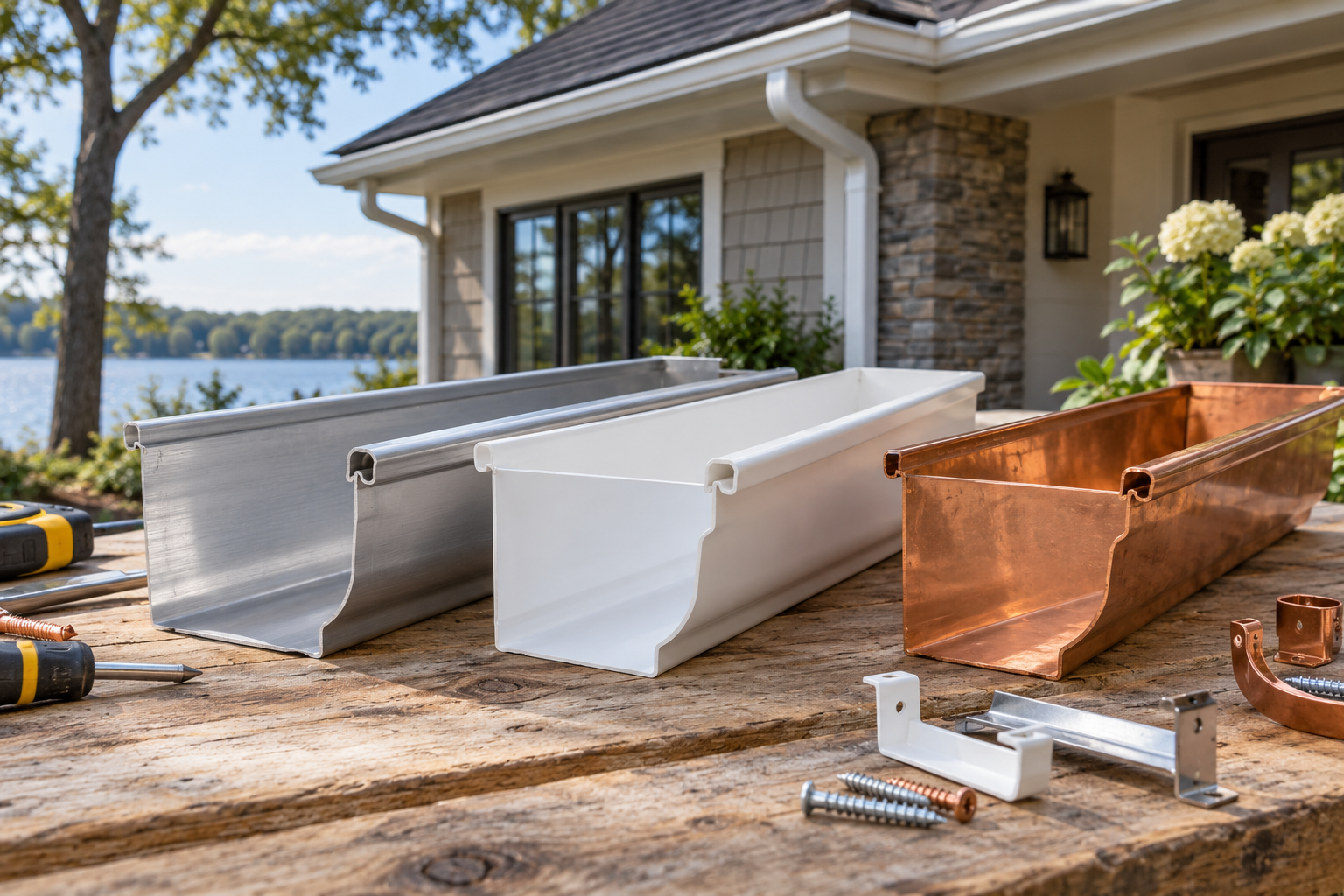
Aluminum vs. Vinyl vs. Copper Gutters: A Practical Material Comparison
Choosing a gutter material involves more than the price of a length of gutter. The finished system must suit the roof edge, local exposure, attachment method and maintenance plan. Aluminum, vinyl and copper each deserve consideration, but they are not interchangeable products.
Aluminum: compare the full specification
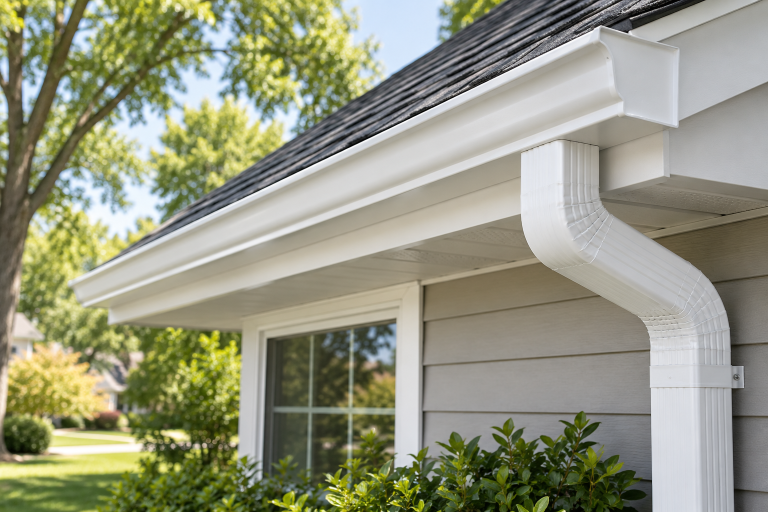
Aluminum is available in different finishes, profiles and thicknesses, with both seamless and sectional options. Ask the supplier to identify the actual material specification. A quote that only says aluminum does not tell you whether competing bids use equivalent products.
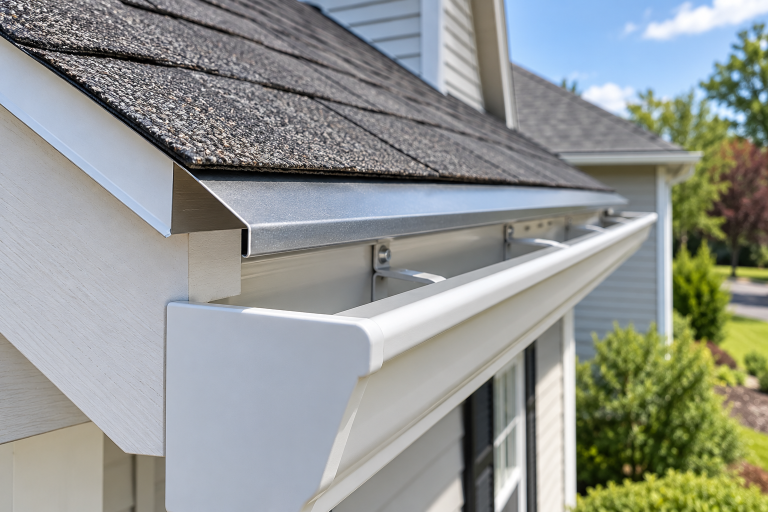
Inspect dents, failed connections and damaged finishes rather than assuming every aluminum system has the same durability. Compatible fasteners and correct support remain important.
Vinyl: focus on joints and product instructions
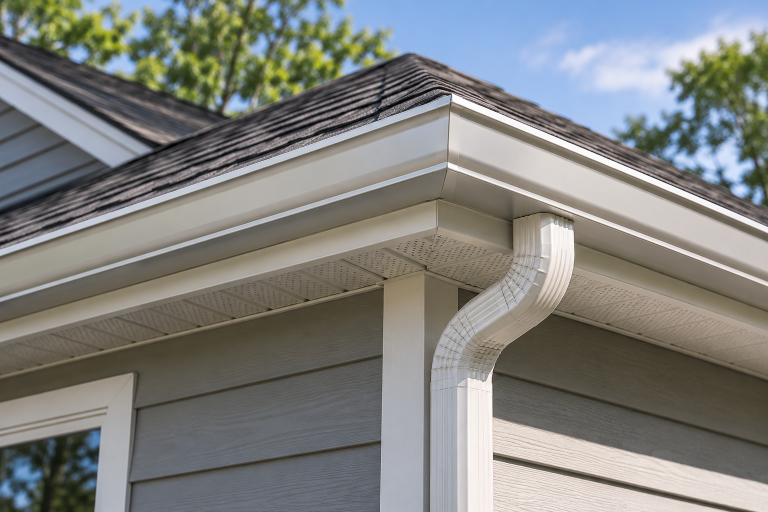
Vinyl systems are commonly assembled from manufactured components. Review the manufacturer’s requirements for support spacing, temperature movement and joint assembly. The number of corners and fittings can meaningfully affect the completed price.
If you live where temperature extremes are common, ask the manufacturer or installer whether the exact product is appropriate for that exposure. Avoid a blanket lifespan promise based only on the word vinyl.
Copper: consider appearance and compatible detailing
Copper is often selected for its architectural appearance and changing surface patina. Ask how joints will be formed, what compatible brackets and fasteners will be used and how runoff staining or contact with other metals will be managed.
Check whether the design suits your house before treating copper as an automatic upgrade. A well-specified material still needs sufficient drainage capacity and correct installation.
A quote comparison checklist
- Measured linear feet and number of corners.
- Gutter profile, nominal size and material specification.
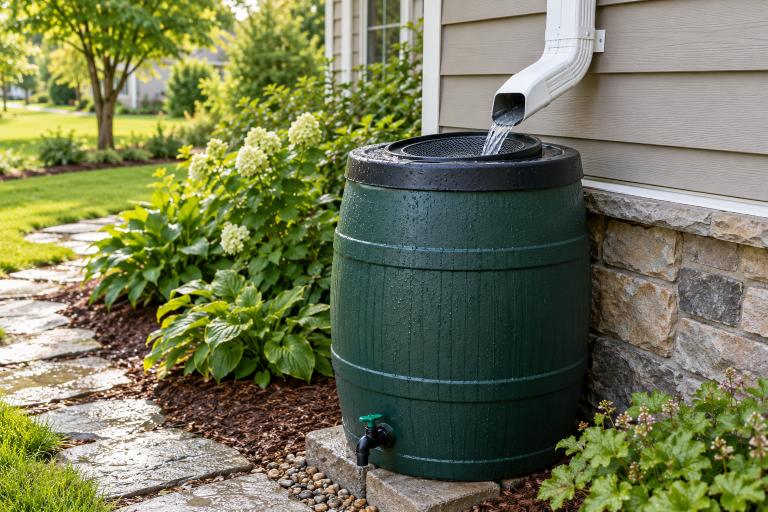
- Downspout dimensions, outlets, elbows and discharge extensions.
- Old-system removal, access equipment and fascia repairs.
- Workmanship, finish and material warranty exclusions.
Use the installation cost calculator to organize options, then compare local quotes with the same scope. Calculator outputs are planning estimates, not a material supplier’s current offer.
Keep material and hydraulic sizing separate
A premium metal cannot compensate for a restricted outlet or an undersized gutter profile. First establish roof area and local design rainfall, then confirm capacity. Our gutter sizing comparison explains the main inputs.
How should you choose?
Start with suitable products for the house and climate, compare equivalent installed specifications and review maintenance access. If joint count is part of your decision, read the seamless versus sectional guide. The best comparison is between complete systems you can actually obtain and service locally.