Leaking Gutter Seams: How to Diagnose a Joint Before Repairing It
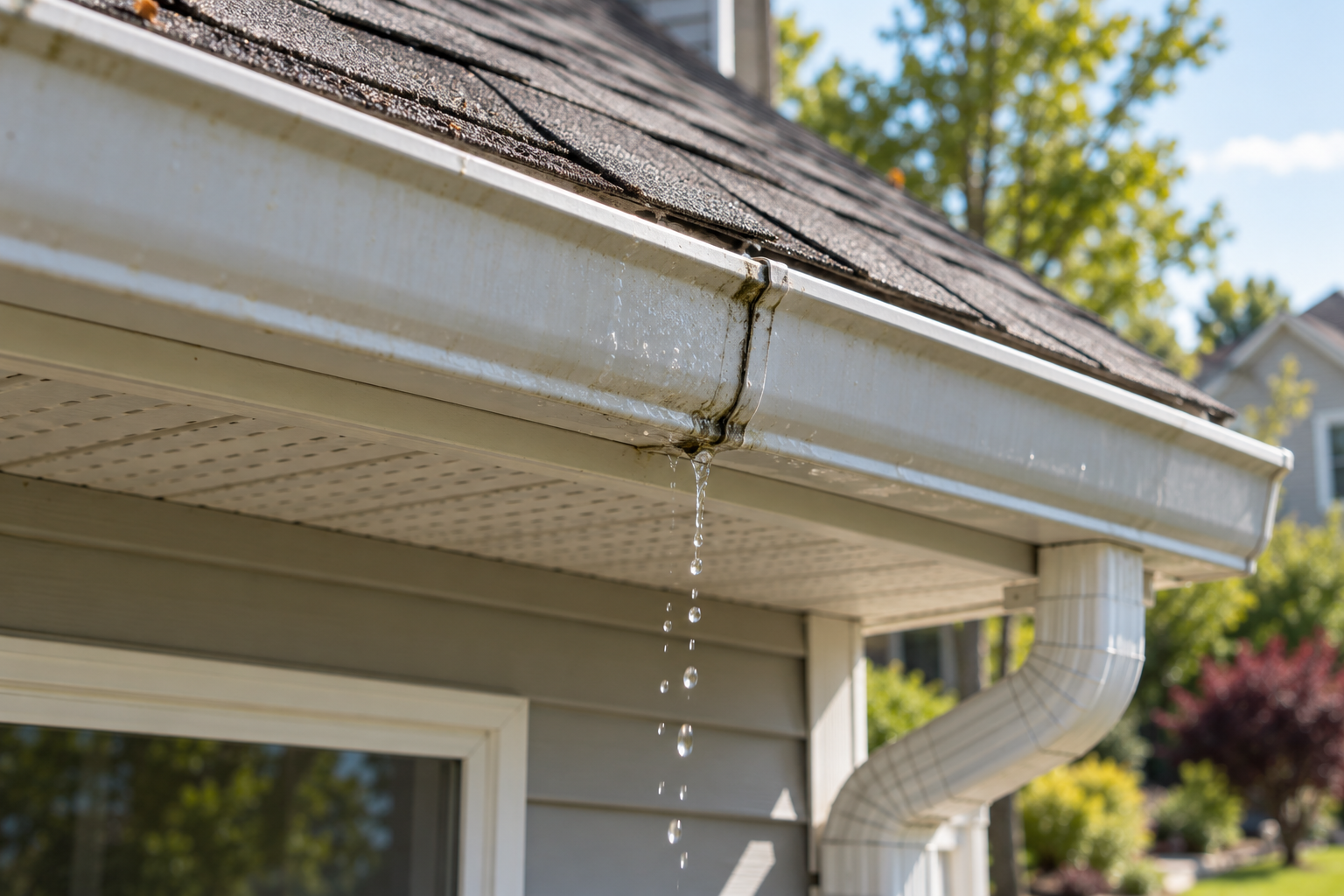
A drip beneath a gutter joint can come from failed sealing, movement, corrosion or water backing up above the joint. Before applying another layer of sealant, establish whether water is escaping through the connection or simply overflowing nearby.
Confirm the leak location
Observe the joint from the ground during rainfall. Note where the drip starts and whether the gutter above it is full. Water can travel along the underside before falling, so a drip location does not always identify its entry point.
If the gutter is overflowing, work through the overflow diagnosis checklist first. Sealing a joint will not clear a blocked outlet.
Inspect the support and material
- Check whether the joint has separated or shifted.
- Look for a sagging run or loose adjacent hanger.
- Note visible corrosion, cracks or previous repair buildup.
- Have the supporting fascia checked where fixings are loose.
Use a qualified contractor for elevated access. A stable, correctly supported joint is a better repair candidate than one that keeps moving under load.
Choose a compatible repair method
Follow the gutter and repair product manufacturer’s instructions. Surface preparation, dryness, temperature and cure time can determine whether a sealant bonds properly. Different metals, coatings and plastic systems may require different products or replacement fittings.
A repair quote should describe removal of failed material, preparation of the joint and the exact sealing or joining method. Smearing new material over debris makes the underlying condition hard to assess.
Decide between local repair and replacement
A localized sealing failure in otherwise sound guttering may justify repair. Repeated failures across many joints, major deformation or extensive deterioration may make replacement more practical. Compare the scope, expected durability and warranty rather than choosing solely by the lowest initial price.
Use the gutter repair cost calculator to organize a preliminary budget. For a broader system change, compare the replacement cost calculator.
Verify the finished work
After the required cure time, have the repaired connection checked under controlled flow where safe. Inspect the nearby outlet and discharge route too. Keep the product and workmanship details with your maintenance records.
Do seamless gutters avoid this problem?
They reduce joints along straight runs, but corners, outlets and end caps still have connections. Our seamless versus sectional comparison explains the difference. The quality of those remaining connections and their supports still matters.