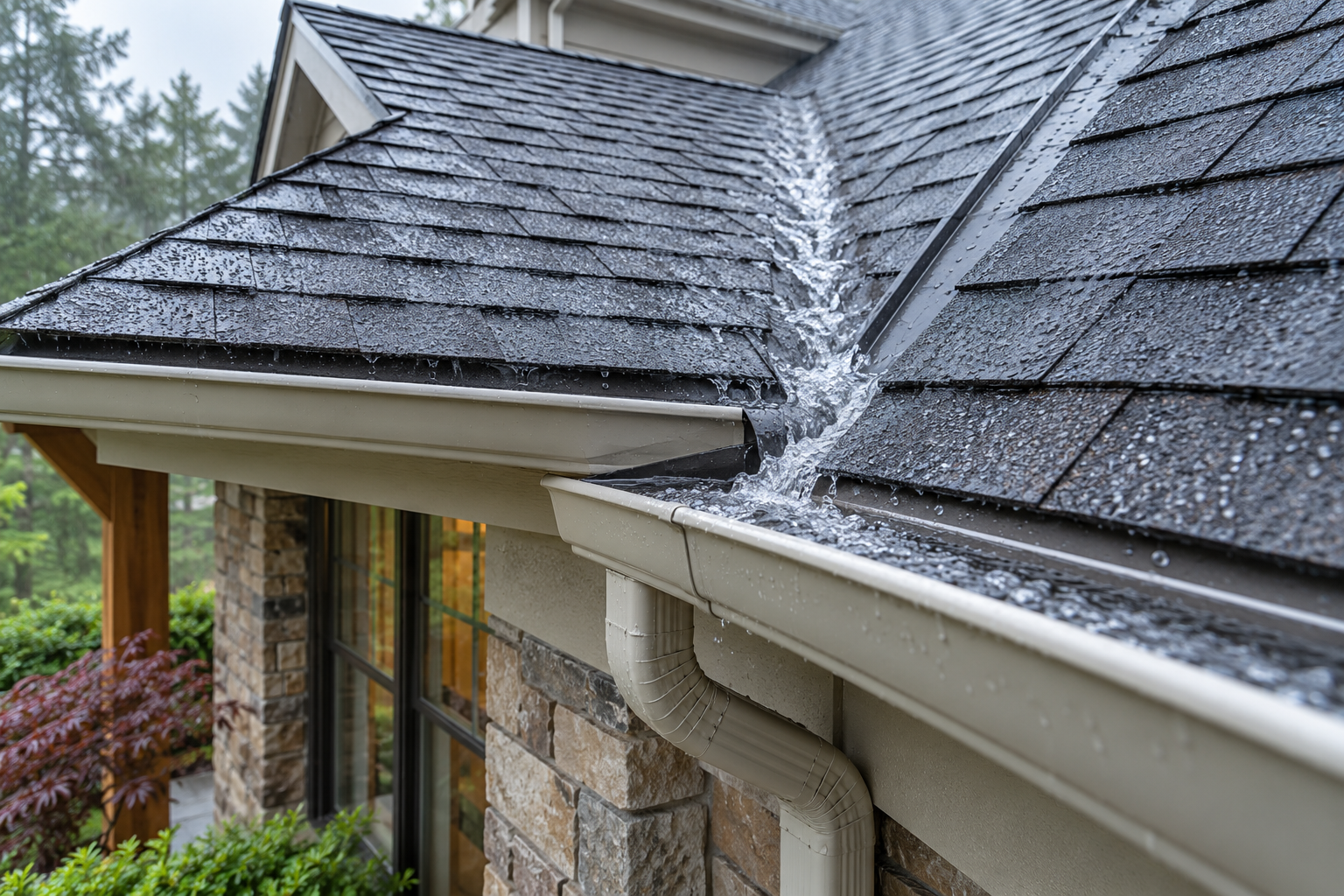
Roof Valley Gutter Overflow: Why Water Overshoots at Corners
A roof valley can send a concentrated stream of water into a short section of gutter. If water overshoots at an inside corner, the cause may be local flow concentration, debris, gutter position or a restriction farther downstream. Replacing the entire gutter system is not always the first answer.
Why valleys behave differently
Two or more roof planes may direct water toward the same valley. The receiving gutter must collect that concentrated stream while also carrying water arriving from the rest of the run. A gutter that performs well along a straight eave can still struggle at that specific point.
Upper-roof downspouts discharging nearby can add another concentrated flow. Mark these on your roof sketch before evaluating a remedy.
Identify where the water goes
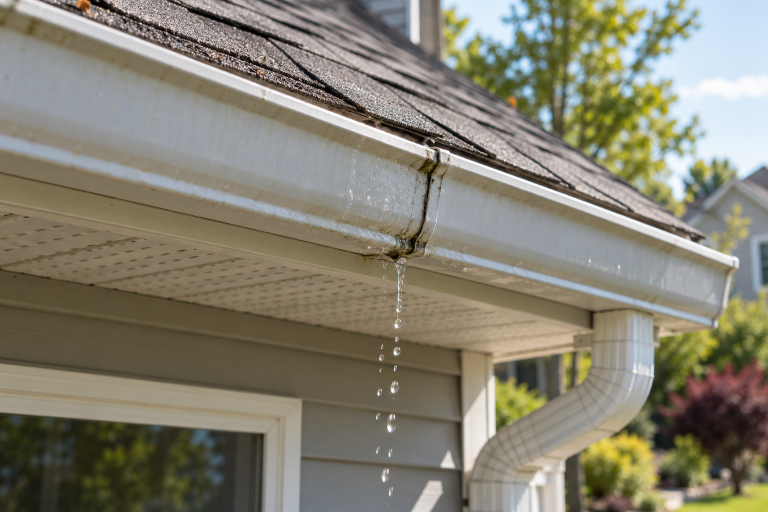
From a safe ground-level position during rain, note whether water jumps over the outer edge, backs up from the outlet or runs behind the gutter. These patterns suggest different investigations. Avoid elevated inspections while surfaces are wet.
Use the overflow diagnosis guide to distinguish collection problems from blocked drainage.
Check the simple restrictions first
- Debris piled at the valley landing point.
- Leaves or roofing material caught around the outlet.
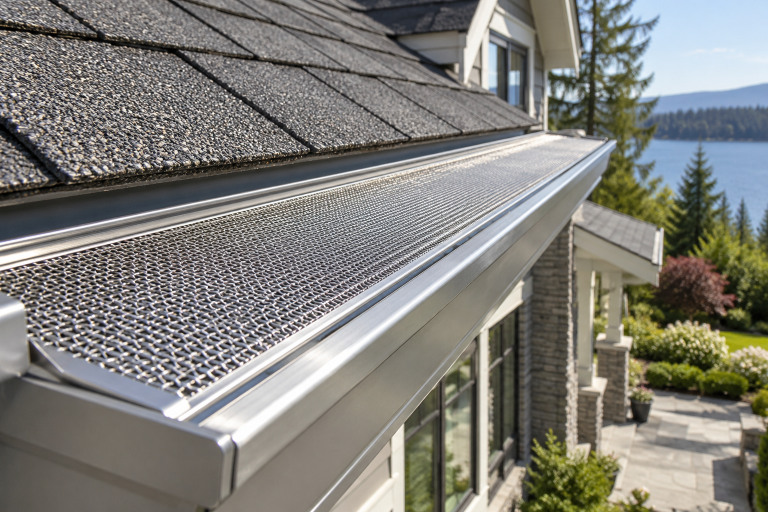
- A guard surface covered in fine debris.
- A sagging corner or gutter pitched away from its outlet.
- A downspout elbow or buried drain that cannot discharge freely.
Cleaning and a controlled drainage check may reveal whether the original layout still works. Ask the contractor to document the findings before recommending upgrades.
Evaluate splash guards carefully
A splash guard may help contain a concentrated stream when the underlying gutter and outlet have sufficient capacity. It cannot create extra outlet capacity or remove an obstruction. An unsuitable barrier may move the overflow point or interfere with maintenance.
Have the proposed product checked for compatibility with the gutter profile, roof edge and existing leaf protection. Ask how debris will be removed from behind it.
When a layout change may be needed
If a clean system still cannot handle the contributing catchment under the design conditions, an installer may recommend a different gutter profile, larger outlet, additional downspout or changed flow route. Compare runoff with the water runoff calculator, then verify actual product capacities.
What should a repair quote include?
Request the diagnosed cause, proposed hardware, attachment and sealing method, and a check of the downstream discharge. Review the downspout layout guide before approving a proposal that adds outlets. The objective is to manage the full water path, not merely hide the visible splash.